
Recovery · July 17, 2026 · 4 min · By Elspeth Marchetti
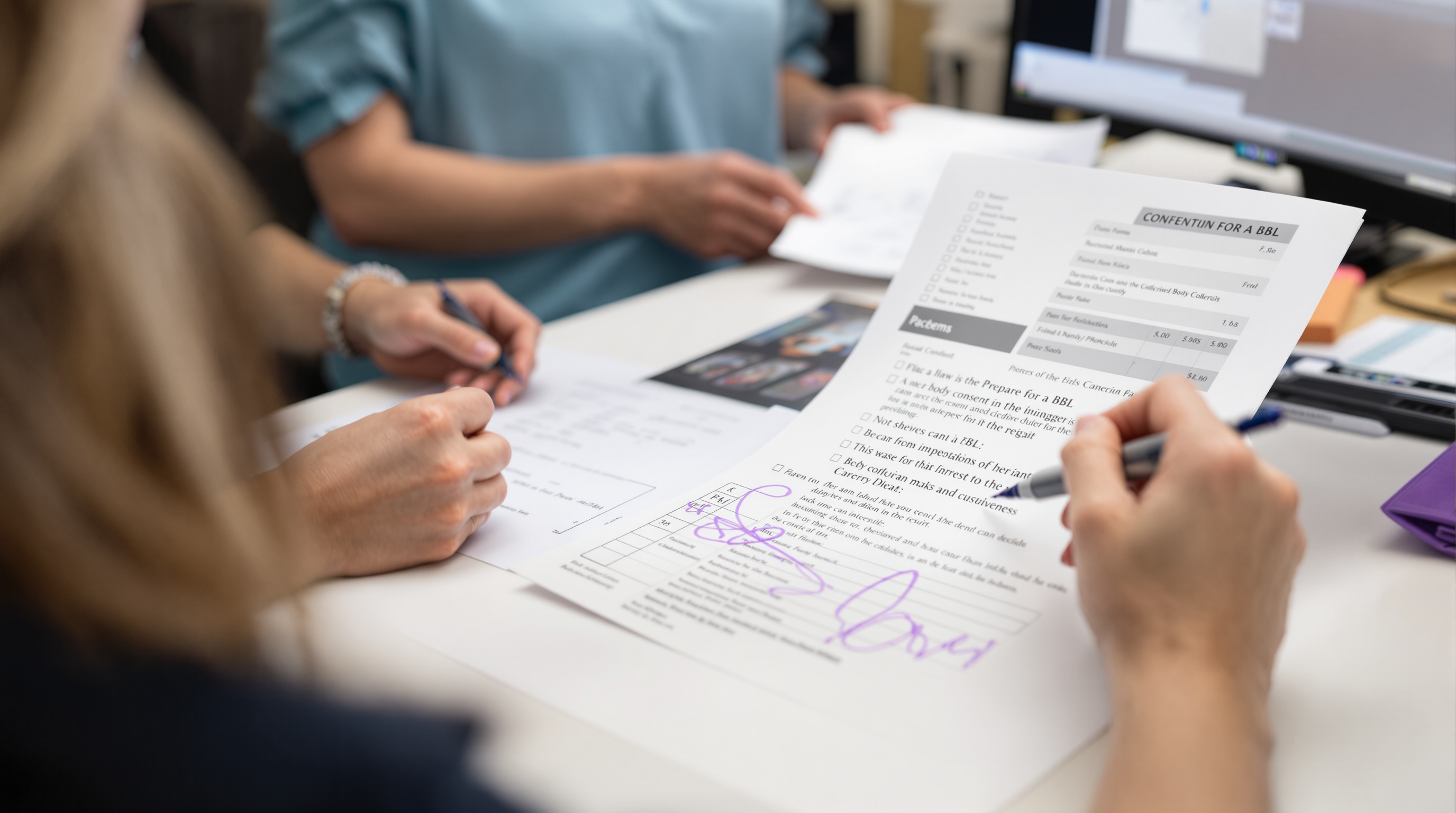
How to Prepare for a BBL: The Pre-Op Checklist That Protects Your Result
The weeks before surgery are the part of a Brazilian butt lift you actually control. Here is what to stop, what to arrange, and what to confirm so your grafted fat has the best possible chance.
Most patients spend months choosing a surgeon and almost no time preparing their own body for the operation. That is backward. The weeks before a Brazilian butt lift are when you can measurably change your odds of a smooth recovery and a result that lasts, because a fat transfer only succeeds if the grafted fat finds a healthy, well-supplied home. This is a practical checklist for the four to six weeks before surgery, and why each item is on it.
Stop nicotine, completely, and early
Nicotine is the single most important thing to eliminate before a BBL, and vaping and nicotine gum count. Nicotine constricts the small blood vessels that grafted fat depends on to survive, and smoking impairs wound healing and raises the risk of infection and tissue death. A large review of the surgical literature found that smokers have significantly higher rates of wound complications and that the effect is dose dependent, which is why surgeons ask patients to quit weeks in advance rather than the night before (Sørensen, Annals of Surgery). Most plastic surgeons require four to six weeks nicotine free before and after surgery, and some test for it. Treat this as non-negotiable: a fat transfer performed on constricted vessels is a fat transfer set up to fail.
Review every medication and supplement
Bring a complete list of everything you take, including over-the-counter products and herbal supplements, to your pre-op appointment. Many common substances thin the blood or interfere with anesthesia. Aspirin, ibuprofen and other NSAIDs, fish oil, vitamin E, ginkgo, garlic tablets and high-dose turmeric can all increase bleeding, and your surgeon will typically ask you to stop them one to two weeks out. Never stop a prescription medication on your own; if you take a blood thinner or a drug for a chronic condition, the decision to pause or bridge it belongs to your surgeon and prescribing physician together. The American Society of Anesthesiologists keeps a plain-language guide to what to disclose and stop before an operation (ASA, Preparing for Surgery).
Get your bloodwork and clearances done
Your surgeon will order pre-operative labs, and depending on your age and health, a medical clearance from your primary doctor or a cardiac workup. This is not a formality. It catches anemia, clotting disorders, uncontrolled blood pressure and blood sugar problems that raise the risk of the operation. If you have already worked through whether you are a good candidate for the procedure, this is where that conversation becomes concrete numbers. Handle these appointments early, because an abnormal result can push your date, and a rushed clearance helps no one.
Stabilize your weight, do not crash diet
A BBL moves your own fat, so you need enough of it to harvest, and you need your weight to be stable. Patients sometimes try to lose weight fast right before surgery, which is counterproductive: it depletes donor fat and stresses the body during healing. Aim to be at a steady, realistic weight for several months beforehand, and understand that major weight swings after surgery can distort the result. The goal is to arrive at surgery metabolically calm rather than mid-diet, with a body that has fat to give and energy to heal.
Build the recovery setup before you need it
The first two weeks after a BBL are dominated by one rule: keep pressure off the grafted fat. That means you cannot sit or lie on your buttocks normally, so the equipment has to be ready in advance. Buy your compression garment and a BBL pillow, arrange a driver for the day of surgery and the first follow-ups, stock easy meals and water, and set up a place to sleep on your stomach or side. Read through what the week-by-week recovery actually demands so nothing is a surprise, because trying to assemble this while sore and groggy is how people end up sitting when they should not.
Eat and hydrate to heal
In the weeks before surgery, shift toward protein, iron-rich foods, fruits and vegetables, and steady hydration. Healing tissue and new blood vessels are built from what you eat, and arriving well nourished gives grafted fat a better chance. Limit alcohol, which thins the blood and dehydrates, in the days leading up to your date. The NIH's consumer health service has straightforward guidance on getting your body ready for an operation (MedlinePlus, Surgery).
Confirm the plan, and the surgeon, one more time
Preparation is also the moment to re-confirm you are in the right hands. The safety of a BBL depends heavily on technique and on where the fat is placed, a story we cover in the conversation that changed the procedure. Verify your surgeon's board certification and facility accreditation, and make sure your written plan, expected volume and aftercare instructions match what you discussed. The American Society of Plastic Surgeons publishes patient guidance on the Brazilian butt lift that is worth rereading the week before.
The takeaway
You cannot control everything about a BBL, but the pre-op weeks are the part that is genuinely yours. Quit nicotine early, clear your medications and labs, stabilize your weight, set up your recovery space, eat to heal, and confirm your surgeon: doing these six things well is the cheapest, most reliable way to improve your own outcome.
Related reading: Are you a good BBL candidate? and BBL recovery, week by week.
More in Field Notes
View all →- Too lean for a BBL: the three part donor check before you book
- The donor site problem: a BBL is judged from behind and lived in at the waist
- Nicotine Before a BBL: Why Vapes and Pouches Count, and What the Clearance Calendar Actually Looks Like
- Lymphatic Massage After a BBL: What It Does and When to Start